Search This Blog

Sunday, October 13, 2013

Angels and Demons

by Dan Brown

        After reading Dan Brown's The Da Vinci Code I was thrilled to learn that he had turned it into a series featuring the main character Robert Langdon in each of them. I am always skeptical about sequels - I have been let down by them many times before. However, Angels and Demons, in my opinion, surpassed The Da Vinci Code in thrills, puzzles, adventures, and character development.
        In the middle of the night, Robert Langdon is summoned to Swiss research facility (CERN) where a murder has just taken place.  The body of the murdered physicist, Leonardo Vetra, has been branded in his chest with a cryptic symbol.  He and his daughter Victoria Vetra had been working on a scientific breakthrough.  Not only has this prominent physicist been murdered, but his protected laboratory has been broken into and an essential piece of his research is missing.  This piece of their research is called "antimatter" and can hold wonderful new insights into scientific research.  Or it could be used as a weapon of mass destruction, since it acts like a bomb when it is not in a stable environment.  Given some evidence at the crime scene, it is thought that the ancient underground brotherhood, the Illuminati, are behind the murder and the stolen antimatter.  Throughout history the Illuminati were known to be enemies of the Catholic Church.  While the evidence leans towards the Illuminati as the perpetrator, Langdon is not convinced as there has been no attack against the church.  However, on the eve of holy conclave a representative of the Illuminati says the antimatter is hidden somewhere in the Vatican and will explode once its battery source runs out.  Langdon immediately fears for the lives of the cardinals that are involved in holy conclave.  Langdon flies to Rome in order to join Victoria Vetra in the search for the father's killer and to help save the Vatican. This amazing chase for the truth unearths many facts about history, dozens of puzzles, and pages of fast paced adventure.
        This book was a fantastic sequel to the Da Vinci Code - in fact I liked it even better.  The thrills in this book never stopped and the way it intertwined with history was fascinating.  Dan Brown again makes the landscape in Rome so real that I felt I was back there traveling.  I was lucky enough to read the Special Collectors Edition that shows the buildings, art, and objects of history he is describing in the book.  If you can, I would recommend this version as it was truly a great way to immerse yourself in this book.  My only criticism of this book involved the overly drawn out ending.  I would have been satisfied had it ended 50 pages earlier, but it did not severely alter my opinion of this book.  I could not put this book down!

Rating: 4.5 out of 5

Up Next: The Lost Symbol
   

Micro

By Michael Crichton and Richard Preston
            Micro is Michael Crichton’s final novel, due to his unfortunate death from throat cancer in 2008.  This is the second posthumous novel released, and was actually only about 1/3 completed at the time of his death.  Richard Preston was selected to complete the novel based on Crichton’s extensive notes and research.
             The novel begins by introducing us to a group of graduate students in various areas of study.  Their studies include venomology, toxicology, and arachnology. Nanigen industries visits the group while they toil in obscurity in Cambridge, Massachusetts.  One of the Nanigen recruiters also happens to be the brother of Peter, one of the graduate students.  The lure of industry is too much for the lowly graduate students, and they decide to go check out the Nanigen facility.  The day before the students are set to travel to interview at Nanigen, Peter gets a phone call that his brother has been killed in a boating accident. 
            The cadre of grad students head to Hawaii to visit the Nanigen labs.  They learn that Nanigen is using unique and innovative technology to mine the environment in search of novel compounds for medicinal use.  Their trip soon takes a turn for the worse as they realize what a narcissistic maniac the President, Vin Drake, is.  Peter believes that Vin is responsible for his brother’s death, and soon all the graduate students have a much bigger (pun intended) problem to deal with.  Subjected to the company’s technology, the students must use their particular area of expertise to survive the wilderness in a way that they never thought they would have to experience. 
            Like many times when an artist dies, their fans are left wanting more.  When musicians die, we are treated to previously unreleased tracks or live recordings.  Typically these works of art require some touching up or interpretation, but in order to be released they need to be mostly completed.  I would equate this book to not just remastering some rough tracks to complete a song, but rather redubbing guitar solos, rerecording imperfect vocals with an impersonator, and even rewriting the chorus.  It’s as if your favorite artist wrote three to five lines of a song and the rest was completed by someone else.  This is not a knock on Richard Preston, but I couldn’t help but think of Crichton like Terry Kiser in Weekend at Bernie’s.  The change in authorship was palpable, and it just didn’t really seem like a typical Crichton novel. All the familiar Crichton themes (opposition of morality and science, fear about progressing technology etc) were present, but the remainder of the book lacked the significant and sound scientific thought that Crichton’s books typically present.  Unfortunately, Preston can’t hold a candle to the intellect of Crichton.  Unless you can separate the two authors, I would avoid this book if you wish to not tarnish the reputation of the late Michael Crichton.  The book wasn’t terrible overall; it just really should not be published with Crichton’s name.

Rating: 2.5 out of 5 Bunsen Burners

Up Next: Coma by Robin Cook


Saturday, October 12, 2013

Something Wicked This Way Comes

By Ray Bradbury  
              I had never really heard of or read anything by Ray Bradbury.  However, a quick internet search will often tie Ray Bradbury to authors I enjoy.  My lovely wife bought me this book for Christmas, so I decided that now was the time to dive in.  I must say that this book was vastly different from other books I have read in this genre.  One way that this book was so different from my other reads was the way the setting was described.  I often had to reread paragraphs in the beginning of the novel because of all the words spent describing settings, characters, and aspects of the books.  After I adjusted to Bradbury’s writing style, it became less of a distraction and was ultimately appreciated. 
            The book begins detailing the life and friendship of Will Halloway and Jim Nightshade.  The boys are fresh into adolescence and experiencing the multitude of growing pains we all know so well.  Silly games of childhood are left behind and more mature adventures take place.  They are on the cusp of growing up and it’s hard.  A carnival comes to town, and the boys are curious about the many characters employed by the circus.  The boys sneak into the carnival and witness some magic that occurs on the carousel.  After witnessing this secret, the carnival workers begin to hunt down both boys.  Their curiosity puts both them and their families in danger.  The many creepy sideshow characters, who are wonderfully described and presented, add to the drama and peril of the boys’ situation.
            At the beginning of the book, I assumed that this story was all about Will and Jim.  As I progressed, I began to realize how important Charles Halloway’s character, Will’s father, was to the story.  This was most important for the subplot of growing up.  The dynamic that was created involving an older father (50’s with teenage son) interacting with his young son was an important part of the story and was very well done.  The contrast between experience brought by age, and the carefree nature of youth was an important motif in the story.  Bradbury did a wonderful job capturing both of these aspects of their personalities and really made Charles Halloway relatable.  I think that what you get from this novel may be highly influenced by what stage of your life you are in when you read it.  Young adults will likely relate more strongly with the kids, while adults will read the first chapters with a feeling of nostalgia and some sadness as the book progresses.  As one of the better known Bradbury books, I would definitely recommend this book.  This recommendation is more closely tied to the pedigree of the author, and the wonderful job the author did conveying the emotions of the characters.  On the contrary, while I enjoyed the book, I was never on the edge of my seat nor did I race home from work to sit down and read it. 

Rating 3.25 out of 5 Bunsen Burners

Up Next: Coma by Robin Cook, or Micro by Michael Crichton

Friday, September 27, 2013

The War on Football: Saving America's Game

By Daniel J. Flynn
            If you base your opinion of football on only what you hear in the media, your opinion will likely be as follows.  Football is a violent, barbaric game which is inherently dangerous to all participants with potential for immediate and long lasting bodily harm.  The War on Football further examines the media’s claims and encourages further discussion of America’s sport.
            In his speech to Ivy League students, Malcolm Gladwell suggested “When people die of a dumb and violent nineteenth-century game that serves no educational function, I think the obvious thing to do is to stop playing the dumb and violent nineteenth-century game.”  Even recently President Obama suggested that if he had a son, he would think very hard about letting him play football.  But in a time where more and more children are being classified as obese, where do we place our priorities?  Is it worth the risk to let our kids play a sport that the media has so vilified?  Surely the skills they learn on the field cannot outweigh the damage it does to their bodies, and the risk they face each time they put on their helmet and shoulder pads.  This is likely the thought of most parents and, as this book points out, the fallacy.
            This years’ Winter X games killed more athletes than the NFL has in 93 seasons.  Bicycling kills about 700 Americans every year, but there’s no media attention suggesting parents ban bicycles.  In 1970, 23 highschoolers died from hits in football.  Last year, only 2 highschoolers lost their lives.  If anything, football is becoming a safer sport than ever before.  Now that we know that football players aren’t dropping dead all over the country, what about lifelong impacts of playing the game? 
            The author investigated further by looking into concussions, CTE (Chronic Traumatic encephalopathy, which is associated with repetitive head trauma) and other diseases.  Former football players show an increased risk of Alzheimers, ALS and Parkinson’s.   We’ve all heard the media say that the average life expectancy of football players is significantly shorter than average Americans.  Fortunately, this is an outright lie with no scientific basis.  At some point, a nonexistent statistic was quoted and has continued to pop up erroneously in the media.  Logically, football players are chosen and rewarded for being at the peak of fitness.  In most cases, this extends to later life as players maintain a certain level of fitness.  In both 1994 and 2012, the NIOSH found that NFL players live longer than American males outside of football.
            What about the concussions, and the lawsuit against the NFL by former players?  Well I won’t even go into detail about how Riddell is the primary helmet manufacturer being sued and how many players did not actually even wear Riddell helmets.  Or the fact that 10% of the litigants never saw action in a single NFL game.  Or I could mention how the concussion studies by Mark Lovell are more about profit than science.  Read the book, you will be enlightened.
            It’s around this point where you can’t help but cry out “What about all the people the media has highlighted who have gone crazy or killed themselves because of lingering effects of football and concussions?!”  Autopsies have shown tau protein in the brains of people who have sustained repetitive head trauma, and tau is associated with mental problems such as dementia, poor decision making and depression.  But CTE can only be diagnosed in the dead, and brains are often donated under suspicion of CTE, which results in selection bias in the studies.  What about the athletes who have killed themselves “as a result of CTE?”  Unfortunately, cases like the happy go lucky Junior Seau have been misrepresented by the media.  What you won’t hear is that Seau reportedly drank heavily 5 to 6 nights a week, gambled excessively, had an insatiable appetite for women, and was experiencing financial difficulties after several investments went belly-up.  Several more examples include: Dave Duerson – shot himself in the chest and asked that his brain be studied.  His business was also held in receivership, his home foreclosed, and he filed for bankruptcy listing liabilities of ~$15 million.  Mike Current – his suicide was followed with the subheadline “due to the inability to deal with the traumatic brain injury caused by concussions.”  What was pushed aside was how he was facing a possible 30+ year sentence for allegedly molesting three children.
Daniel Flynn weaves history, quotes, and research into a coherent story about football.  We learn that football is a sport that has evolved over the years into the game it is today.  Flynn also points out how important it is to read between the lines of media reports, and to do your own research before you believe anything.  While we do not know for sure what causes CTE, as football fans we must accept the ever changing rules of our game.  I really enjoyed this book, as it provided a thorough dissection of many of the current issues surrounding the game as well as a history of the game itself.  I hope that parents who are worried about their children’s minds being made soft by football will read this book and learn that maybe a soft body is worse than a hard hit in the long run.

Rating: 4.25 out of 5 Bunsen Burners

Up Next:  I’ve got a huge list of books that need reviewing, too many to list.  Stay tuned.

Sunday, August 18, 2013

Winter of the Worlds

By Ken Follett
In the second book of the Trilogy, Ken Follett details the lives of the offspring from the first novel.  The book is set in the time of the Second World War, which includes details leading up to and through the conclusion of the war.  He artfully sets events in motion, and details history by giving a face to the problem.  The spread of Fascism is much more tangible and relatable when we are scared what will happen to Maud and her children.  Once again, Follett does a wonderful job of teaching history to the reader.  He not only provides an interesting story with very relatable characters, but also one that makes the events of the world at this point in time easy to grasp.
One of the first events in the book demonstrates the progressive takeover of the Nazi regime.  Ethel and her son Lloyd are visiting Maud and her family in Germany.  During this visit, the Nazis raid and shut down the local paper where Maud works, and persecute Robert Von Ulrich and his partner Jörg.  The Nazi regime continues to gain ground and political power, with Adolph Hitler ultimately leading the country as Dictator.  Through the eyes’ of Maud’s family; we witness Jewish persecution, family schism due to nationalism, the economic effect of war on the German people, and many other tough situations.  It was very real and understandable why the characters behaved the way they did because of Follett’s wonderful writing.  In a point I have beaten to death with my previous review of Fall of Giants, Follett does a terrific job with character development which fosters the readers’ empathy.
On the English side, the three families are the Leckwiths, Williams’ and Fitzherberts.  The Fitzherberts still languish in luxury, and Boy Fitzherbert is being groomed as heir to the estate.  He is being educated at the best schools, and is very active politically.  This garners the attention of American Daisy Peshkov, Lev Peshkovs daughter, who is very attracted to the wealth and power of upper class life.  Lloyd Williams is also pursuing his education in Europe, and later becomes involved in the Spanish Civil War with his cousin Dave Williams.  The accounts from the Spanish Civil War are some of the most memorable parts of this book.  Without revealing any surprises, these events had me shocked at the injustice and on the edge of my seat in suspense.
I felt that the American families in this book took a larger role this time around.  Gus Dewar, and more notably his son Woody are major characters.  Woody gravitates towards politics like his father, while younger brother Chuck ultimately joins the Navy.  Follett focuses his attention on The Great Depression, socioeconomical unrest, and events leading to American involvement in World War II.  It was interesting to relearn all the events that almost resulted in America entering the war effort, and how much we tried to avoid it. 
As I write this review, I realize how complex and intertwined the characters of this book are.  It would be impossible to describe each family, each member of the family, their love interests, etc. without consistently referencing back to previous parts of my review.  I don’t consider myself someone who can easily follow a multitude of characters, as well as their motives.  To this note, it is probably the reason I don’t often gravitate towards this style of writing.  In this case, I found that it worked well, even if I truthfully did not always know who the author was talking about for several pages.  As with Fall of Giants, this book was a refreshing and not heavy handed history lesson featuring relatable and well developed characters.  I would highly recommend this book for those of you who are interested in historical fiction, or anyone who (like myself) felt as though they had forgotten much of their American history. 

Rating: 4.25 out of 5 Bunsen Burners


Up Next: The Given Day by Dennis Lehane

Tuesday, August 13, 2013

Fall of Giants

By Ken Follett
            Over the past few years I have expanded my scope of preferred authors.  My wife is thrilled that when we go to a book store or book sale, my first comment is no longer “where’s the Stephen King section?”  My sister took a gamble this last Christmas and purchased this book by Ken Follett for me.  Aside from Matterhorn, I haven’t read much historical fiction, so I was not sure how this would turn out.  I must say that she certainly hit the mark and really grabbed a terrific novel. 
            Fall of Giants is a novel based upon the time period before and through the First World War.  The story is told from the perspective of families from four of the major countries involved in World War I (America, Germany, England, and Russia).  By interweaving personal drama with national peril, the author creates sympathy for the characters and also teaches the reader history.  I had forgotten much of middle school history, but I can say that this was a pleasant and entertaining way to get a refresher on world history.
            In the mining town of Aberowen, England we follow the Williams family.  The Williams family is a coal mining family which includes David (head of the coal miners’ union), Cara (Mom), Billy (aka Billy Twice), and Ethel.  When we meet the family, Billy is getting ready for his first day in the mines.  Billy meets a great deal of hazing and harsh treatment.  His inner fortitude shines through as he sticks to his guns, and stands up to his bullies.  Ethel Williams is a maid at Ty Gwyn, which is owned by the Earl (Teddy) Fitzherbert or “Fitz.”  Fitz is the ninth richest man in England, partly due to his ownership of the Aberowen coal mines.  Ethel begins an affair with Fitz, which ultimately changes her life.  Ethel learns to fend for herself, and ultimately becomes one of two main voices in support of women’s rights.
            On the American front, we meet the Dewar family.  Gus Dewar is from a wealthy family and is a close adviser to Woodrow Wilson.  Gus’ personal relationships along with his political encounters drive the American plotline.  We learn about America’s reluctance to enter the war, and their plans for worldwide reformation based on “The Fourteen Points” directly from Woodrow Wilson
            In Germany, we learn about cousins Walter and Robert von Ulrich.  Walter becomes involved with Earl Fitzherbert’s sister, Maud.  As the relationship between the two begins to flourish, the developing conflict between England and Germany becomes a major hurdle.  Will their love be able to survive such a widespread skirmish?
            Russian brothers Grigori and Lev Peshkov, detail the struggles of daily Russian life.  Grigori is the responsible brother, always taking care of his younger brother Lev.  So when Lev gets into some trouble, Grigori gives up his ticket to America to save his brother’s life.  In America, Lev winds up falling back into his old ways and gets himself into trouble following his libido.  Lev ends up working for a very powerful and corrupt family in Buffalo.  Grigori’s side of the story is especially interesting as it details the struggles of the Russian people in the early 1900’s.  He fights corruption, starvation, and for equality for all citizens of Russia.  Ultimately Grigori becomes a soldier in the Russian army and becomes intimately involved in the Communist revolution.
Follett must be praised not only for creating interesting characters with relatable conflicts, but also for his attention to detail in regards to historical events.  Important events in each country are easily understood because the reader experiences them through the eyes of his characters.  Along with the political developments (the league of nations, assassination, and war), there is also a wealth of information sprinkled in about the women’s rights movement told from strong female characters developed by Follett.  Follett does an amazing job of teaching you about the period without making you feel like it’s a history lesson.  Like most people, I have forgotten the majority of the history lessons I was taught in my formative years.  It was so refreshing to read about the 14 points, the League of Nations, Archduke Franz Ferdinand’s assassination and many of the semi-familiar events surrounding World War I.  I had no difficulty following the story arc of
each character, even as the author jumped from story line to story line.  It’s so easy to forget how ubiquitous the impact of The Great War was for the citizens of each country involved.  Follett’s writing makes this impact accessible and relatable to the reader, and he tells a terrific story at the same time.  I would highly recommend this book for the ample historical information along with the entertaining plot.

Rating: 4 out of 5 Bunsen Burners


Up Next: Winter of the Worlds by Ken Follett

Thursday, August 8, 2013

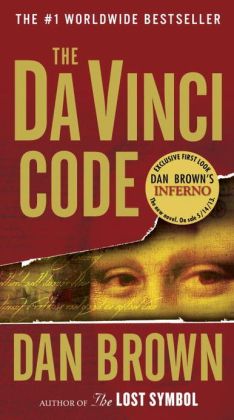
The Da Vinci Code

by Dan Brown

      In the late hours of the night a ghastly murder has taken place in the famous Louvre Museum in Paris, France.  The victim is the Louvre's chief curator whose body was found in an odd pose by the famous Mona Lisa painting.  Robert Langdon is called to the scene by police as a person of interest because he was scheduled to meet with the curator the night he was murdered.  Langdon is a Harvard symbologist and works together with the curator's granddaughter, Sophie, who is also a French cryptographer in order to try to solve this murder.  The two follow clues left by the curator that lead them to a trail of secrets that date back to the time of Leonardo Da Vinci.  It turns out the curator was a member of the secret society, The Priory of Sion.  In fact, the curator died trying to protect the most sacred of the Priory's religious artifacts: the Holy Grail.  Sophie and Robert find help in one of Langdon's old friends who happens to be a member of Opus Dei - a Catholic group determined to snatch the Priory's secret.  As they search for clues that will lead to the identity of the murderer and the answers the secret the curator was supposed to protect, they are challenged physically and mentally to uncover the truth so that the secret is not lost forever.

      This adventure takes readers through the streets of France and England which I absolutely loved having been to both of these places in my own travels.  If you have not seen these beautiful cities, this book describes them wonderfully.  This book is rich with art history, religious history, and intricate puzzles.  If you can get your hands on the special illustrated edition, it allows you to see the pieces of art discussed and some inside to the puzzles he is describing.  The plot is complex and full of new terms and historical information that require an attentive reader.

      The main character is definitely not your average knight in shining armor meets modern day action superhero.  He is the exact opposite, which in a sense is a refreshing change.  I love his intelligence, ability to decipher puzzles, and his quick thinking.  I even enjoy the fact that he is an unassuming hero majority of the time.  Brown has an ability to take otherwise monotonous facts in history and weave them into a deliciously fabulous tale.  Another great read for me, and a fantastic recommendation for you!  This book is part of a series.  Brown just released the 4th book with Robert Langdon as the main character.  Needless to say I will be picking that up soon.    

Rating: 4.5 out of 5

Up Next: Angels and Demons by Dan Brown

Sunday, July 28, 2013

Rage

By Richard Bachman (Stephen King)
            This is a special review of Stephen King’s only out of print work.  Being a Stephen King nut, my wife knew that I was dying to read this rare King work.  She was able to find a hardcover copy of “The Bachman Books,” and in an effort to add to her lengthy list of “Best Wife Ever” she bought it for me.  I probably would have finished the story in a single day, if day to day responsibilities hadn’t gotten in the way.
            The story begins with Charlie Decker being summoned to the principal’s office from his math class.  Mr. Denver has called Charlie down to expel him for almost beating his Chemistry teacher to death with a pipe.  While being lectured, we get our first insight to Charlie’s mental state.  Soon after being informed that his chemistry teacher survived the beating, Charlie begins to rebel against Mr. Denver’s psychoanalysis and starts to deride Mr. Denver personally.  Making inappropriate comments; Charlie leaves the office, grabs his weapon, sets his locker on fire, and takes his class hostage when he shoots his math teacher in the head. 
            While Charlie is in control of the classroom, we gain further understanding about his mental health.  We learn about his life and struggles through a shared story time with his classmates.  This is a very effective way to provide backstory, motive and compassion for the main character without doing so in some overt way.  His fellow students share stories as well, further supporting the motif of teenage angst.  As the story reaches its rapid conclusion, Charlie has changed in the eyes of the reader from a nebulous hard case to a relatable troubled teen.  The story kept a moderate pace and quickened slightly at the conclusion as the reader anxiously waits to see what will happen to Charlie and his classmates.
            I found this story to be edgy, relatable and distinct.  As always, Stephen King has created an interesting story with relatable characters.  I am sure that my enjoyment is somewhat colored by the rarity of this story, much like an expensive pair of shoes or clothing just feels “better.”  But I must say that this early story (started when King was in high school) caries all of the familiar elements of a Stephen King book.  In a recent interview; Stephen King stated that he does not believe that music, video games, and other media are to blame for violent behavior.  He does, however, feel that these types of media can act as an “accelerant” for certain individuals who are looking for a specific outlet for their behaviors.  This “book control” is the reason he has pulled “Rage” from print.  Having read the story, I can understand why the book was pulled.  While the book does not romanticize or glorify violent behavior, the attention Charlie gets from his classmates as well as the sheer fantasy provided by the plot of this book could be dangerous in the wrong hands.  I respect Mr. King’s resolve to keep this controversial (and possibly dangerous) story out of the hands of the general public, as a sacrifice to keep this story out of the hands of “broken” individuals.  I would definitely recommend that you read this book if you are a fan of Stephen King as I am.

Rating: 4.25 out of 5 Bunsen Burners


Up Next:  I have really fallen behind on my postings.  My intention is to post my reviews of the following stories which I have read within the past few months.  Fall of Giants (Follett), Winter of the Worlds (Follett), Something Wicked this Way Comes (Bradbury), NOS4A2 (Hill), The Given Day (Lehane), and Micro (Crichton and Preston).  I am also currently reading Coma by Robin Cook.  I apologize for the delay, but keep coming back if you’re looking for a good read and don’t know what to get.